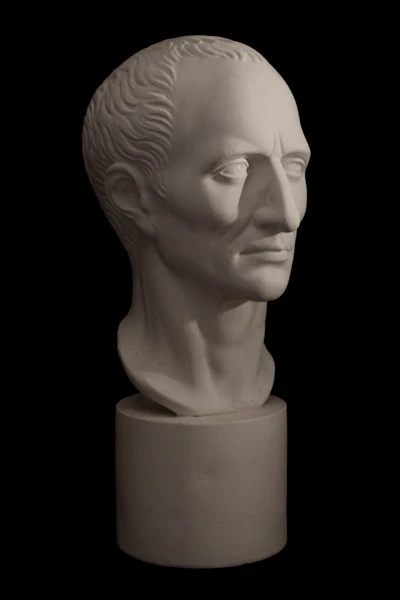
Antinous Head - Item #724
20.5 Inches High x 13 Inches Wide x 14.5 Inches Deep
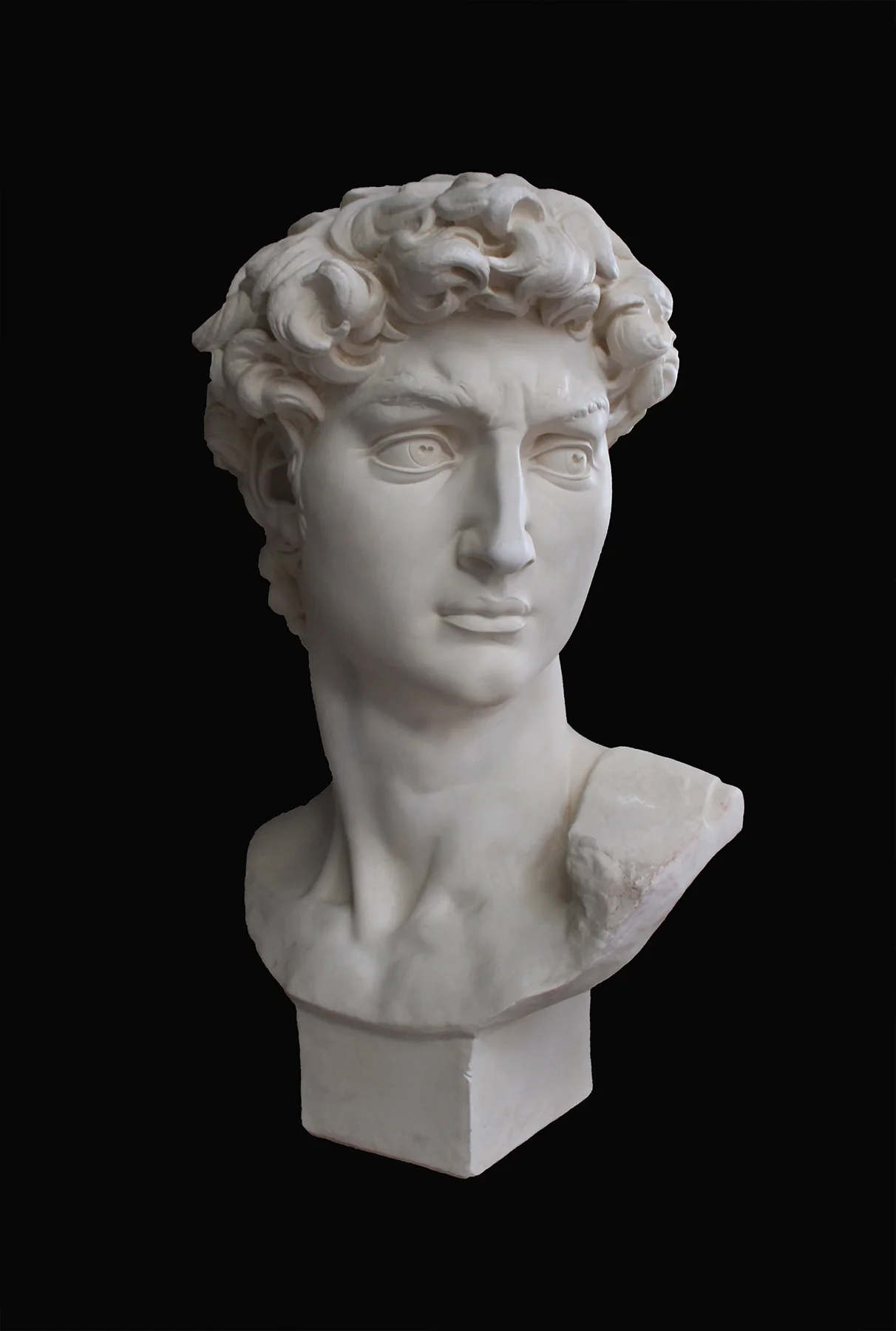
The head from Item #139. After Antinous, Emperor Hadrian's lover, died, Hadrian had many statues made of him. Since the man's features were always idealized in the Hellenistic style, it cannot be assumed that the statues are actual portraits of Antinous. Here, Antinous is depicted as the god Dionysus, complete with a wreath of ivy.
Artist: Unknown
Museum: British Museum, London
Time Period: Ancient Roman, c. 130-140 C.E.
Sources:
“Portrait Head.” Museum number 1805,0703.97. The British Museum, http://www.britishmuseum.org/research/collection_online/collection_object_details.aspx?partId=1&objectId=460095.
Ramage, Nancy H. and Andrew Ramage. "Hadrian and the Classical Revival, AD 117-138." Roman Art: Romulus to Constantine. 5th ed., Pearson Prentice Hall, 2009, pp. 229-255.
20.5 Inches High x 13 Inches Wide x 14.5 Inches Deep
The head from Item #139. After Antinous, Emperor Hadrian's lover, died, Hadrian had many statues made of him. Since the man's features were always idealized in the Hellenistic style, it cannot be assumed that the statues are actual portraits of Antinous. Here, Antinous is depicted as the god Dionysus, complete with a wreath of ivy.
Artist: Unknown
Museum: British Museum, London
Time Period: Ancient Roman, c. 130-140 C.E.
Sources:
“Portrait Head.” Museum number 1805,0703.97. The British Museum, http://www.britishmuseum.org/research/collection_online/collection_object_details.aspx?partId=1&objectId=460095.
Ramage, Nancy H. and Andrew Ramage. "Hadrian and the Classical Revival, AD 117-138." Roman Art: Romulus to Constantine. 5th ed., Pearson Prentice Hall, 2009, pp. 229-255.
Original: $760.00
-65%$760.00
$266.00Description
20.5 Inches High x 13 Inches Wide x 14.5 Inches Deep
The head from Item #139. After Antinous, Emperor Hadrian's lover, died, Hadrian had many statues made of him. Since the man's features were always idealized in the Hellenistic style, it cannot be assumed that the statues are actual portraits of Antinous. Here, Antinous is depicted as the god Dionysus, complete with a wreath of ivy.
Artist: Unknown
Museum: British Museum, London
Time Period: Ancient Roman, c. 130-140 C.E.
Sources:
“Portrait Head.” Museum number 1805,0703.97. The British Museum, http://www.britishmuseum.org/research/collection_online/collection_object_details.aspx?partId=1&objectId=460095.
Ramage, Nancy H. and Andrew Ramage. "Hadrian and the Classical Revival, AD 117-138." Roman Art: Romulus to Constantine. 5th ed., Pearson Prentice Hall, 2009, pp. 229-255.